"Ju Xuan Jing" The Classic of the Aggregation of Mystery
-
(and the secret teaching on the silence of the Masters)
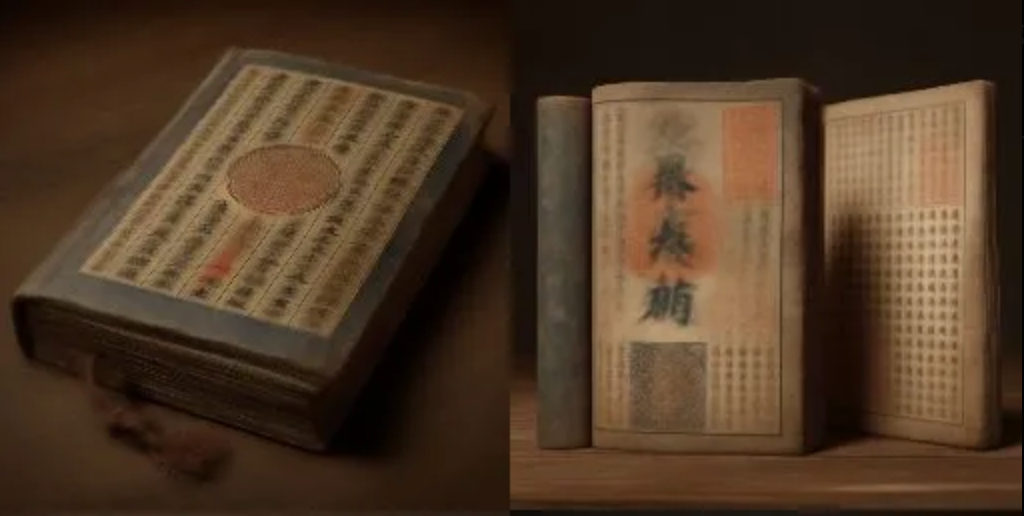
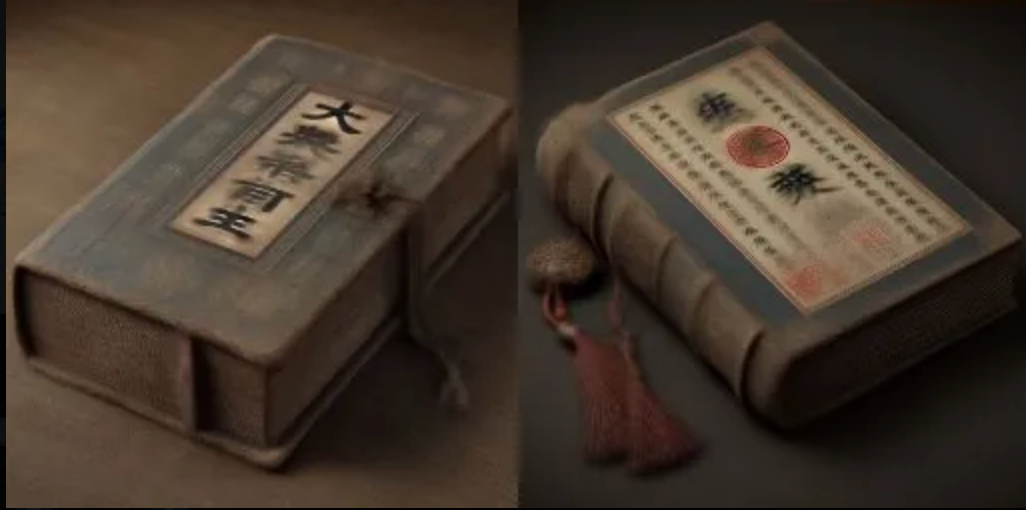
The Ju Xuan Jing, Ge Xuan (葛玄, 164–244), The Classic of the Aggregation of Mystery, belongs to the great Taoist canon, the Daozang, where it is classified in the section known as the Great Mystery (Tai Xuan Bu). Sources place it between the end of the Tang dynasty and the beginning of the Song dynasty, a period when the lineages of internal alchemy, oracular cosmology, and Qi Men Dun Jia practices converged and combined. Its concise and rhythmic language concise and rhythmic, indicates an orally transmitted text written down in the form of three scrolls, composed in four-character verses, intended for ritual recitation rather than discursive reading.
The content of the Ju Xuan Jing presents a rare synthesis of classical Taoist knowledge: the art of the Eight Trigrams and the Nine Palaces is combined with the energetic dynamics of the human body and the breath of the Dao throughout the manifested world. The work lies at the frontier between divination and alchemy: each verse condenses a correspondence between the celestial cycles, the rhythms of nature, and the internal mutations of the mind.
The intention of the text is not speculative. It does not seek to describe a cosmology, but to provoke in the reader-practitioner an experience of condensation and dissolution of mystery: ju xuan, “gathering the profound.” As such, it belongs to the category of “operative classics” (gong jing), intended to activate an intuitive understanding of the Dao rather than to expound its theory. Its coded language, its lack of an identified author, and its numerological composition reflect the initiatory function of the text: it is a manual for the transformation of breath and consciousness, originating from a time when the master's words were still transmitted in the secrecy of the mountains and imperial courts, without name or trace, faithful to the silent nature of the Dao that it embodies.
The very title of the Ju Xuan Jing encapsulates the entire program of its doctrine. The character ju, “to gather” or “to condense,” evokes the action by which the scattered breaths of the world come together to form a living center; it translates the movement of return to unity, the principle of all internal paths. Xuan, “mystery,” refers to the invisible depth of the Dao, that which connects without being seen and fertilizes without appearing. This term refers to the metaphysical root of Taoism, that “dark thread” that runs through Heaven, Earth, and Man. Finally, jing, literally “the thread” or “the classic,” refers both to the fabric that supports the whole and to the text which, when recited, allows this thread to be rewoven within oneself.
Thus, Ju Xuan Jing literally means “the Classic where mysteries gather,” or more freely, “the thread that unifies all the depths of the Tao.” This name expresses the function of the text: to bring together in a single body of practice the scattered aspects of Taoist knowledge—cosmology, breathing, observation, meditation, and inner alchemy. It is not a treatise that explains the mystery, but an instrument that concentrates it. By reciting or meditating on its verses, the practitioner reproduces in their own breath the very gesture of the Dao: reuniting what is separated, melting opposites, circulating life between the visible and the invisible.
The etymology also suggests a ritual intention, a text linked to the early pre-Taoist shamanic texts. The word ju is found in ancient texts to refer to ceremonies in which the forces of Heaven and Earth are “assembled”; xuan qualifies the rites intended for the silent invocation of the unmanifest. The union of these two characters indicates that the Ju Xuan Jing is not only a writing, but a sacred act, a moment of gathering the Mystery in human speech. By pronouncing its title, one already evokes the movement it teaches: bringing the infinite back into the heart to reveal its continuity with the Dao.
The structure of the Ju Xuan Jing reflects the very architecture of the cosmos it describes. Composed of three scrolls corresponding to the three planes of reality, Heaven, Man, and Earth, it unfolds a tripartite scheme that serves both as a framework for reading and as a model for integration. Each scroll develops an aspect of the circulation of the Mystery: the first exposes the celestial dynamics and the laws of emanation, the second describes the place of the human being in this network of breaths, and the third reveals the mode of union with the telluric and cosmic forces. This trilogy takes up the logic of the San Cai, the “Three Powers,” where man, the conscious pivot between Heaven and Earth, resonates the two dimensions through his inner practice.
Within these three sections are twenty-four subsections corresponding to the twenty-four breaths of the Chinese solar year; they reflect the cyclical breathing of the world. The text thus follows the very rhythm of nature: it is not a system of thought, but a living calendar of the Dao. Each of these sections evokes a moment in the universal movement and offers, in the form of condensed verses, an inner gesture of resonance. The concise language, composed of four-character sentences, follows a ritualistic scansion: it is meant to be chanted, so that the vibration of the sound reproduces the pulsation of the cosmos.
The scrolls are traversed by two major symbolic frameworks: that of the Eight Trigrams, which order transformations, and that of the Nine Palaces, which represent the spheres of breath circulation. These diagrams, inserted in a veiled manner into the text, constitute the hidden framework of the teaching. Reading the Ju Xuan Jing is therefore less a study than an immersion: the practitioner follows the succession of verses as one follows the current of an energetic river, from its celestial source to its earthly mouth. Through this progression, he learns to perceive in his own body the invisible geography of the world and to recognize, in the movement of breaths, the very structure of Mystery.
The doctrinal content of the Ju Xuan Jing unfolds the essence of Taoist operative cosmology, condensing it into an extremely dense language. The entire text is structured around four closely related themes: the union of opposites, the circulation of mystery, silent transmission, and the effacement of the master. These motifs are never presented as abstract principles, but as inner movements that the practitioner must experience in his own flesh.
The text teaches first of all that all manifestation arises from the tension between the poles of Yin and Yang and that the practice consists in bringing them together without confusing them. The “aggregation of mystery” refers to the moment when the two opposing breaths recognize each other as aspects of the same life process. The body then becomes the place of this reconciliation: each breath prolongs the union of Heaven and Earth, each gesture brings multiplicity back to a single center. From this union flows the circulation of xuan qi, the mysterious breath, which travels through the organs, the seasons, and the stars. By following this invisible current, the practitioner discovers that the Dao does not reside in the beyond, but in the very breath of the universe.
Next comes the teaching of silence. The Ju Xuan Jing states that speech divides while silence connects: "Heaven acts without voice, the Dao remains nameless ." True transmission does not occur through speech, but through the resonance of breath and the quality of presence. The master, aware of this, voluntarily effaces himself so as not to divert attention from the principle he embodies. He becomes an active absence, a formless mirror in which the student can recognize the light of his own mind. From this perspective, anonymity is not a moral stance but an ontological necessity: naming freezes, silence liberates.
Thus, the Ju Xuan Jing describes less a doctrine than an attitude to life: bringing opposites together, following the movement of the breath, remaining silent and effacing oneself in the transparency of the Dao. It teaches the way of a nameless master and a word that no longer speaks, through which the Mystery continues to be transmitted without ever being interrupted.
At the heart of the Ju Xuan Jing is a passage that has become the foundation of the spiritual discipline of silence and anonymity. It expresses, in language that is both poetic and rigorous, the nature of the relationship between name, form, and spirit: " The Dao responds without uttering a sound, the Sage acts without a name. When the name is established, the form becomes fixed; when the form arises, the spirit dies. This is why the Master hides his name, in order to preserve the living Spirit. " These few lines condense the entire metaphysics of non-action: words, titles, and reputations are only ephemeral crystallizations that interrupt the flow of breath. As soon as we fix ourselves in an identity, the vital flow that connects us to the Dao freezes, and the transparency necessary for transformation is lost.
In this text, the name is not only a social designation, it is an energetic act: to name is to coagulate the shen, the spirit, into a form; to hide one's name is to keep that spirit in its fluid and undifferentiated state. The Master, aware of this law, withdraws from the visible field so as not to constrain the movement of the Dao through him. His silence is not reserve but continuity: he allows the principle to act without personal mediation. The Ju Xuan Jing sees this withdrawal as an initiatory requirement rather than a moral choice: the guide must disappear so that the disciple can see the Way itself.
This fragment thus highlights the Taoist conception of transmission: speech kills the principle it claims to reveal, while silence engenders it. True teaching is done neither by explanation nor by commentary, but by the living presence of the breath between two attuned consciousnesses. The Master remains anonymous so as not to become an object of attachment; he protects the purity of the bond by withdrawing behind the experience. In the logic of the Ju Xuan Jing, this gesture of effacement is an alchemical act: it dissolves form to restore the light of shen to its origin, allowing the Mystery to continue uninterrupted through the generations.
In the alchemical vision of the Ju Xuan Jing, silence and anonymity are not only part of an ethic of detachment, but also a technique for transforming the mind. The text develops a subtle correspondence between the name and the coagulation of the shen, the Spirit. To name is to fix energy in a stable configuration; to remain silent is to keep it in motion. The name then becomes a point of crystallization where the breath ceases to circulate, while the absence of a name leaves the shen free to merge into the living flow of the Dao. The Master's anonymity is therefore not a sign of outward humility, but a practice of spiritual non-coagulation, a refusal to enclose light in form.
The text specifies that the spirit, if it stops in the name, loses its capacity for mutation: " If the shen becomes immobilized in a word, transformation is interrupted." By avoiding recognition, the sage preserves the fluidity that allows him to act without intention and teach without method. This withdrawal perpetuates the internal movement of Neidan, where any fixation is a loss of energy. The word that remains silent becomes the equivalent of a gentle fire: it heats without consuming, matures without destroying. Thus, the Master's silence is not an absence, but a continuous operation: it transforms the density of the world into transparency, converting form into active emptiness.
This alchemical reading gives the Ju Xuan Jing a scope that goes beyond simple moral teaching. The erasure of the person here is not a renunciation of existence, but a conscious dissolution of the limits of the self to allow primordial energy to flow unimpeded. The Master who remains silent becomes the very space where the Dao is heard; his absence makes fullness perceptible. By refusing to name himself, he preserves the continuity of the Mystery: the shen remains mobile, the transmission remains alive, and the Dao continues its work in the silence of the world.
Anonymity, from the Taoist perspective, is not a moral attitude or an ascetic choice: it is the direct manifestation of the very nature of the Dao. The Dao De Jing opens its first chapter with the essential formula: “The Dao that can be spoken of is not the eternal Dao; the name that can be named is not the eternal name.” " This passage, quoted and commented on many times in internal traditions, forms the basis of the entire metaphysics of the non-name (wu ming). To name is already to separate; it is to draw a line in what is, by its very nature, without contours. By giving something a name, we detach it from the living flow, we make it an object of knowledge and possession. But the Dao, as the first principle, cannot be possessed or known: it passes through forms without ever stopping there.
For the wise, remaining nameless means attuning oneself to this movement. Anonymity here is not social erasure, but the condition of fidelity to reality. What is named becomes fixed, what remains nameless remains in becoming. Thus, those who live according to the Dao refuse the temptation to identify with a role, a function, or an authority, for all identification is a cessation of breath. They seek to maintain themselves in transparency, where the world acts freely through them. In this sense, the name is only an empty shell, a reflection of the world of forms, while the absence of a name allows the principle to remain pure movement.
The Ju Xuan Jing takes up this idea and translates it into the language of practice: “Heaven acts without voice, the Dao remains nameless.”This verse reminds us that true power is not manifested through speech, but through silent resonance. The Dao is that which acts without intention and engenders without showing itself. To remain in this state, the Master must refrain from any sign that separates him from the flow. By erasing his name, he attunes himself to the undifferentiated, and his silence becomes the very expression of the original principle. Thus, anonymity is not a withdrawal from the world but an immersion in its deepest movement: it is the way in which the Dao recognizes itself through man, who ceases to be a name and becomes once again a passageway to the Mystery.
In the Taoist tradition, erasure is not a collapse of being or a loss of self, but the natural completion of inner transformation. The term wu wo, literally “absence of self,” describes a state in which consciousness ceases to contract around an identity and becomes transparent to the totality of life. This is not the negation of personal existence, but the purification of all appropriation: the mind is no longer the center, it becomes space. The practitioner does not seek to disappear, but attunes himself to the movement of the Dao, which flows through everything without ever stopping at anything.
From this perspective, effacement represents the accomplishment of Wu Wei, non-action. Acting without imposing one's intention, speaking without wanting to convince, teaching without setting oneself up as a model: this is what the texts refer to as “accomplishing without a trace.” Zhuangzi expresses it this way: "The holy man has no name; he acts without leaving a mark, he teaches without a voice. " As long as one wants to be recognized as the author of an action, the action remains partial; when one renounces being its cause, it becomes perfect, because it merges with the course of the world. The effacement of the self restores spontaneity to reality and accuracy to the act.
In the Ju Xuan Jing, this idea takes on an operative dimension: the true master is the one who withdraws as soon as resonance is established. He knows that any personal presence, even a benevolent one, freezes the flow of the Dao in a relationship of dependence. By withdrawing, he allows the way to breathe on its own. Erasure thus becomes the seal of accomplishment: it marks the end of the separation between the one who acts and that which is acted upon. Man is no longer a subject facing the world, but a channel through which the world knows itself. Far from being a renunciation, this disappearance is a fulfillment: the being rendered transparent becomes the very manifestation of the Dao, invisible but active, silent but fruitful.
The transmission from Heart to Heart, xin xin, refers in Taoism to the purest mode of communication of the Dao. It is based neither on words nor on writings, but on a direct resonance between two attuned consciousnesses. In this form of transmission, the master gives nothing: he reveals, through his presence, the silent part of the disciple who already knows. In Taoist vocabulary, the heart does not refer to the emotional organ but to the living center where perception and breath meet. To transmit from heart to heart is therefore to make this center vibrate until it regains its original transparency.
This way of teaching requires that the master himself be empty of all intention. As long as he seeks to instruct, he places himself in the duality of knowledge and ignorance. But when he remains in the clarity of silence, his mere existence becomes a mirror. In his presence, the disciple perceives an inner echo that no words could provoke. The Ju Xuan Jing puts it precisely: “The Dao is transmitted from person to person, not through the mouth. Those who hear understand; those who listen only with their ears go astray.” True understanding does not come through the intellect, but through the immediate recognition of the state in which the Dao reveals itself.
In the internal tradition, this transmission is compared to a single breath circulating between two lamps: one lights the other without the flame being divided. The master's heart does not empty itself to give, it opens to resonate. The disciple's heart does not receive to possess, it calms itself to attune. Nothing appears to circulate, and yet everything is transformed. This contact from spirit to spirit, from energy to energy, constitutes the oldest and most secret form of Taoist pedagogy. It seeks neither disciples nor heirs, for it is preserved only in living experience. Where words cease, the breath continues, and the Dao is perpetuated through the transparency of silent hearts.
The figure of the hidden Master, yin shi, embodies the most accomplished form of this silent transmission. He does not teach by exposing himself, but by withdrawing from view, so that the presence of the Dao remains pure in the relationship. This withdrawal is neither secret nor mystical: it is a natural consequence of the principle that everything that shows itself becomes fixed. By refusing visibility, the Master protects the movement of the breath that flows through him. He becomes a passage, not a model. The yin shi does not need to be known in order to act: his very existence in accordance with the Dao restores harmony around him.
In ancient texts, this voluntary effacement is considered the mark of true mastery. Teaching is not reduced to a series of formulas or a corpus of gestures; it manifests itself in the quality of being of the one who has achieved non-action. His silence, his simplicity, the fluidity of his actions constitute the clearest discourse. The Ju Xuan Jing suggests that “Heaven acts without words”: similarly, the true Master operates without presenting himself as the cause. He allows the world to transform through his contact, but claims nothing from this transformation.
This model of the hidden Master is opposed to any form of spiritual authority based on personality. He teaches not by accumulating knowledge, but by effacing himself. What he transmits is the transparency of the Dao through human presence. By remaining outside the field of recognition, he frees the disciple from fascination with the figure of the guide and restores to him the responsibility for his own light. Far from being confused with a posture of humility or modesty, this effacement is an act of metaphysical fidelity: it allows the Way to remain alive, without center or name, as it has existed since the beginning. The Hidden Master is not a figure withdrawn from the world; he is the world withdrawing into itself in order to give itself more fully.
Anonymity, from a Taoist perspective, represents the purest form of transmission. When the name and the figure disappear, all that remains is the continuity of the breath of the Dao. All personal transmission carries within it the seed of division: it attaches the Way to an individual, to an era, to a story, and freezes what, by nature, never ceases to circulate. True teaching, in order to remain alive, must escape this crystallization. This is why the ancient masters, aware of the danger represented by their own image, erased their traces and left behind only the vibration of the principle. Their silence was a way of preserving the clarity of the current they embodied.
In the Ju Xuan Jing, this idea is expressed by the statement that "what is transmitted by breath endures, what is transmitted by name disappears ." Transmission through breath, qi chuan, does not pass through words or rituals; it is communicated through the quality of being, through presence, through the invisible harmony that spreads from heart to heart. The name, on the contrary, belongs to the world of forms and dissolves with it. By remaining anonymous, the master withdraws from the field of causes and effects; he lets the Dao act without appropriation. The disciple no longer attaches himself to a personal legacy, but to the inner transformation that the encounter provokes.
Anonymity thus becomes an act of purification. It strips the transmission of everything that could reduce it to a doctrine, a lineage, or a memory. It restores the teaching to its timeless source: a simple movement of life, a passage of breath through the human being. This stripping away is the guarantee of fidelity to the Way; it allows the Dao to continue to be transmitted, not as knowledge, but as resonance. Where the name fades away, the word regains its transparency; where the master disappears, the principle remains. Anonymity is not the negation of filiation: it is its highest form, where the lineage fades away to become pure continuity of the Mystery.
The Ju Xuan Jing warns against the subtle danger of comparison and imitation, frequent pitfalls for those who embark on the Way. Seeking to reproduce the gestures, attitudes, or stories of the ancient masters is to confuse the trace with the path. What the sages have left behind is not a model to be copied, but an echo intended to awaken a direct understanding of the Dao. Imitation transforms living experience into a fixed form; comparison creates duality between those who believe themselves to be advanced and those they believe they must emulate. In both cases, practice loses its spontaneity and strays from its source.
The text teaches that each being must walk the Way according to the unique configuration of their breath and destiny. Copying the example of another, even a sage, is to deny one's own nature. The Dao always manifests itself through the singularity of the moment: to try to grasp it by reproducing the past is to reduce it to a memory. Aware of this danger, the ancient masters often chose silence and anonymity precisely to prevent their disciples from becoming frozen in admiration. Their effacement is an act of compassion: by disappearing, they leave each person responsible for their own enlightenment.Comparison arises from the mind, which measures, ranks, and judges. But the Way cannot be measured; it reveals itself in the transparency of the moment. The Ju Xuan Jing emphasizes that “he who follows in the footsteps of the master without seeing his heart strays from the Dao.” The essential thing is not to reproduce external forms, but to recognize the living principle that animated them. Practice has value only if it springs from each person's own center, where the Dao breathes freely. To refuse comparison is to rediscover original simplicity, the state of wonder that seeks neither to possess nor to resemble. Thus, the Way remains alive: a movement without copying, a learning without a model, an incessant return to the naked experience of Mystery.
The Ju Xuan Jing closes with a lesson in absolute simplicity that illuminates the profound reason why Taoist masters remain anonymous. By revealing the nature of the nameless, the value of effacement, and the purity of silence, the text shows that true teaching can only be transmitted through that which escapes the gaze. By withdrawing from the world stage, the master protects the continuity of the Dao by refusing to appropriate it. His disappearance, far from being a secret to be unraveled, is the ultimate gesture of love for the Way: by erasing his name, he leaves the living current of Mystery intact.
According to tradition, these masters are also hidden after their death, not out of a desire to conceal themselves, but because their presence merges with the breath of the world. Their traces vanish into the landscape like a breath in the wind. Their tombs are anonymous or symbolic, for they no longer have a place of their own: the Dao has taken them back. To seek to rediscover their faces or their stories would be to misunderstand the spirit of transmission. Curiosity, so natural to the human mind, becomes an obstacle here, because it fixes what must remain fluid. To want to know is already to distance oneself from the Mystery; to want to see is to look away from the invisible.
The Ju Xuan Jing teaches that the Way is not conquered by seeking information or reconstructing the past, but by the silent practice of harmony with the present. The masters disappear to remind us that nothing external can be grasped: only direct experience of the Dao has value as knowledge. Where curiosity ceases, contemplation begins; where the need to know dies, true understanding awakens. The Mystery reveals itself only to those who renounce the desire to unveil it. Thus, the text seals its own truth: the masters remain hidden because they have become the Way itself, and the Way, eternally, shows neither its face nor its name.
A great text of our Tradition.
I will give you our complete version, all 24 chapters of each scroll, as soon as I have time... NOT BEFORE THE END OF 2026
-
Moved from Notes du Professeur by
 Le Professeur